Safe bulk loading
Set hopper height, batch size, operator reach, lifting method, capacity and refill frequency around the real container and shift.
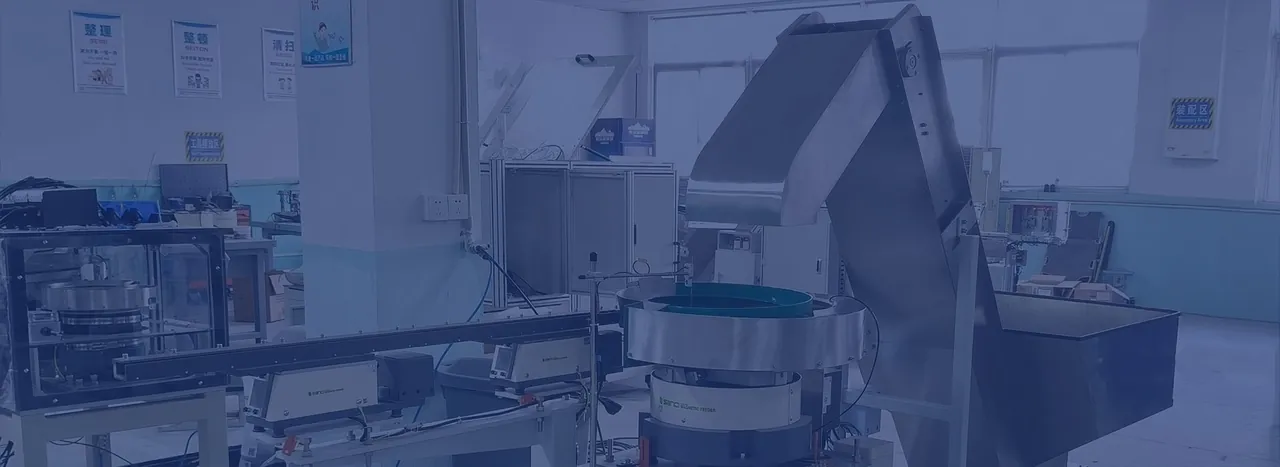
COMPLETE MATERIAL FLOW
Move from ergonomic bulk loading to an oriented, verified and buffered component at the next machine—with one defined control and safety strategy.
DIRECT ANSWER
It is the complete controlled journey from loose components to a production-ready hand-off.
The system can combine a bulk hopper or elevator, measured replenishment, orientation, recirculation, inspection, rejection, accumulation, escapement or robot pick, controls, guarding and connection to the receiving process. Designing these functions together prevents one fast machine from simply moving the bottleneck elsewhere.
SYSTEM ROUTE
Not every application needs every function, but each boundary should be considered.
Set hopper height, batch size, operator reach, lifting method, capacity and refill frequency around the real container and shift.
Use level feedback and measured delivery to keep the orientation process productive without overfilling or excessive contact.
Present acceptable parts in the required attitude while returning incorrectly oriented parts without uncontrolled damage.
Check critical features or orientation where needed, then confirm rejects leave the accepted product path.
Accumulate enough accepted product to separate normal feeder variation from the receiving machine’s cycle.
Deliver the agreed pitch, datum, orientation and availability with defined demand, ready, fault and reset behaviour.
CAPACITY & FLOW
Hopper volume, feed rate and buffer length solve different problems and should not be selected independently.
| Decision | Data needed | What can go wrong |
|---|---|---|
| Bulk capacity | Part bulk density, batch weight, shifts, refill route and manual-handling limits | Frequent loading, unsafe lifts, excessive footprint or too much weight on parts |
| Replenishment rate | Feeder consumption, bed-depth window and low/high level response | Starvation, flooding, noise, damage or unstable orientation |
| Sustained output | Accepted demand, rejects, recirculation, changeovers and recovery states | A peak-speed claim that does not support real production |
| Buffer capacity | Demand variation, acceptable queue pressure and restart behaviour | Line starvation, compressed parts, jams or hidden recurring faults |
| Hand-off release | Cycle signal, part-present checks, pitch and downstream ownership | Double feeds, empty cycles, ambiguous faults or damaged transfers |
ONE CONTROLLED CELL
Operators should see one understandable sequence, not a collection of isolated machines.
Stop and start each stage from measured need so the feeder stays productive without continually driving a full queue.
Distinguish low bulk level, lost orientation, full buffer, downstream stop, open guard and genuine equipment faults.
Provide visible access to likely intervention points, appropriate isolation and a reset sequence that does not create a second fault.
Coordinate tooling and settings across hopper, feeder, inspection, buffer and hand-off for multi-format applications.
Keep routine cleaning, adjustment, wear-part replacement and changeover routes clear in the installed footprint.
Agree ready, demand, permit, starved, blocked, faulted and emergency-stop interactions with the receiving machine.
PROJECT EVIDENCE
A factory test should exercise the material route, controls and recovery—not only show parts moving.
| Test area | Useful check | Evidence |
|---|---|---|
| Loading and replenishment | Normal refill, low level, delayed refill and stop/start response | Stable bed depth and understandable operator prompts |
| Output | Representative mixed sample over an agreed period | Sustained accepted parts at the hand-off |
| Quality | Orientation, damage, inspection and reject confirmation | Recorded acceptance and known limits |
| Buffer | Downstream pauses, full queue, restart and starvation recovery | Controlled accumulation without damaging pressure |
| Fault recovery | Typical empty, blocked, guard-open and sensor conditions | Clear diagnostics and repeatable safe restart |
COMMON QUESTIONS
The right architecture depends on component behaviour, demand and the receiving process.
It is a complete automation cell that receives loose components in bulk, meters them into an orientation process, verifies and buffers accepted parts, and presents them in the required condition to an assembly, packaging or inspection machine.
A correctly sized hopper can reduce frequent manual loading and stabilise feeder bed depth. Its capacity and refill logic should be based on part weight, shift pattern, safe handling, footprint and the feeder’s actual consumption.
The design balances sustained feeder output, usable accumulation, component demand, level sensing and restart logic. The buffer should absorb normal variation without hiding repeated faults or damaging queued parts.
Yes, subject to a review of the hand-off, space, controls, safety, access and installation window. The interface and responsibility for any existing-machine changes should be agreed before design freeze.
COMPLETE SYSTEM REVIEW
Send the component family, batch method, output, hand-off and layout constraints for an initial system review.