Assembly automation
Screws, nuts, washers, pins, rivets, inserts, springs and pressings delivered to drivers, presses, robots and pick points.
Explore this area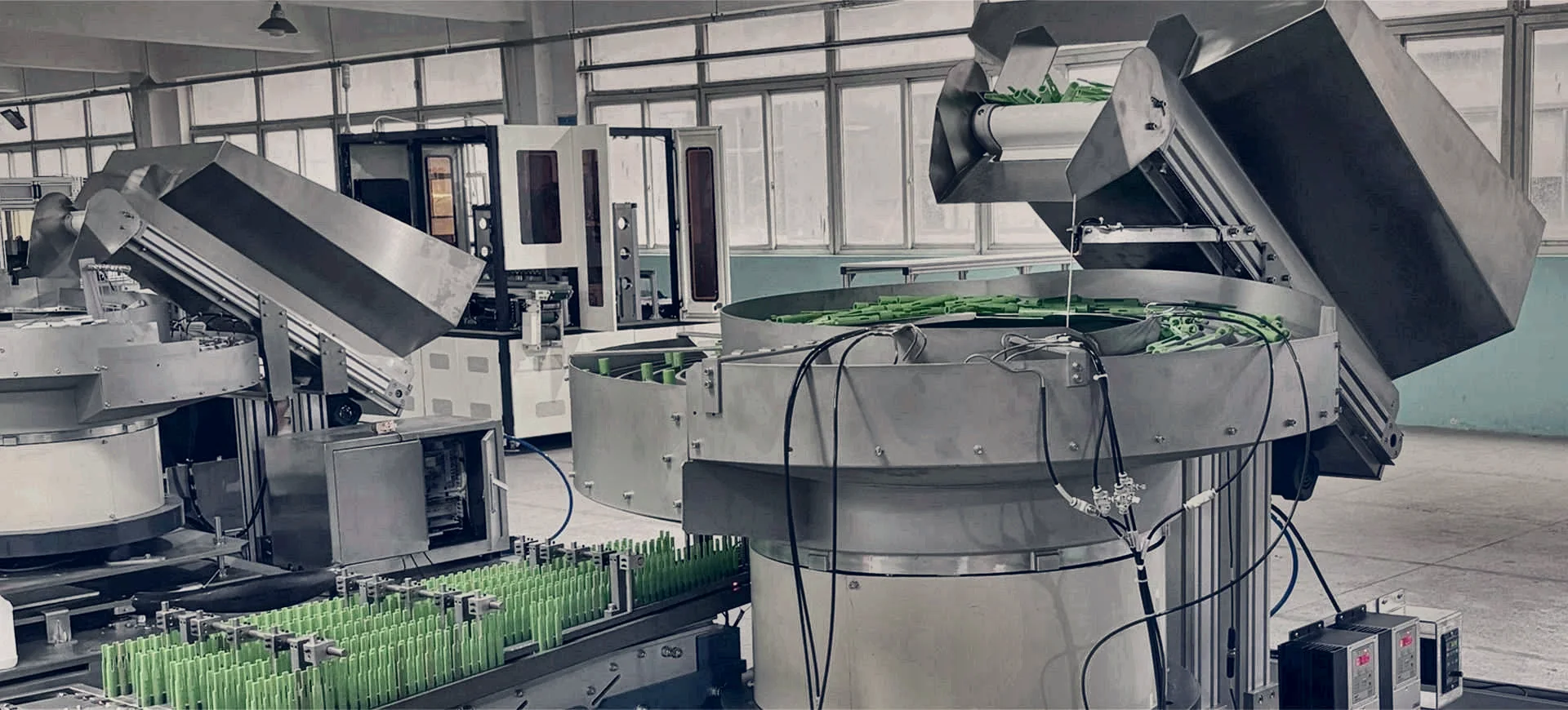
APPLICATIONS
Explore common production challenges, then send the real components and required hand-off so the final architecture can be selected.
BY PRODUCTION NEED
Geometry, finish, part behaviour, output, environment and acceptance determine the design—not the industry label alone.
Screws, nuts, washers, pins, rivets, inserts, springs and pressings delivered to drivers, presses, robots and pick points.
Explore this areaSeveral component feeds coordinated around one assembly recipe, verification plan and production cycle.
Explore this areaChanging product families managed through dedicated, change-part, flexible, tray or hybrid architectures.
Explore this areaClips, connectors, seals, grommets, terminals and mouldings with variant, surface and traceability considerations.
Explore this areaHousings, contacts, terminals and precision connectors managed around small features, static and visual contrast.
Explore this areaControlled-contact components with material compatibility, cleanability, particle and validation requirements.
Explore this areaCaps, closures, scoops, fitments, valves and inserts replenished, oriented and buffered for packaging lines.
Explore this areaAccepted components counted into bags, boxes, kits or demand-led assembly sequences.
Explore this areaAUTOMOTIVE COMPONENTS
Automotive parts feeding often combines detailed orientation with supplier variation, cosmetic surfaces, traceability and high availability.
The complete cell can replenish, orient, verify selected features, buffer and release clips, connectors, seals, plugs, terminals or moulded components at a defined datum for assembly.
ELECTRONICS
Pins, tabs, clips and fine moulded features can snag or deform during bulk recirculation. Static sensitivity and low contrast can also influence the equipment, lighting and material choices.
Samples from normal production variation are used to establish a stable orientation or camera-visible pick face before the downstream insertion, test or packaging interface is fixed.
MEDICAL & HEALTHCARE
Product-contact materials, environment, cleaning method, particulate control and documentation expectations should be stated before design freeze.
Representative samples and measurable acceptance criteria create a clearer route through trials, risk assessment, FAT and change control.
PACKAGING COMPONENTS
Packaging lines depend on continuous component supply. The system may combine low-level loading, an elevator, bowl or centrifugal orientation, inspection, a controlled chute or conveyor and line-ready signals.
Format changes, nested parts, cosmetic marking and brief line stops are considered in the feed path and buffer design.
PROJECT ASSESSMENT
We will help define the right starting architecture, the evidence needed for selection and the interfaces that belong in the project scope.